60%Fewer troubleshooting resources
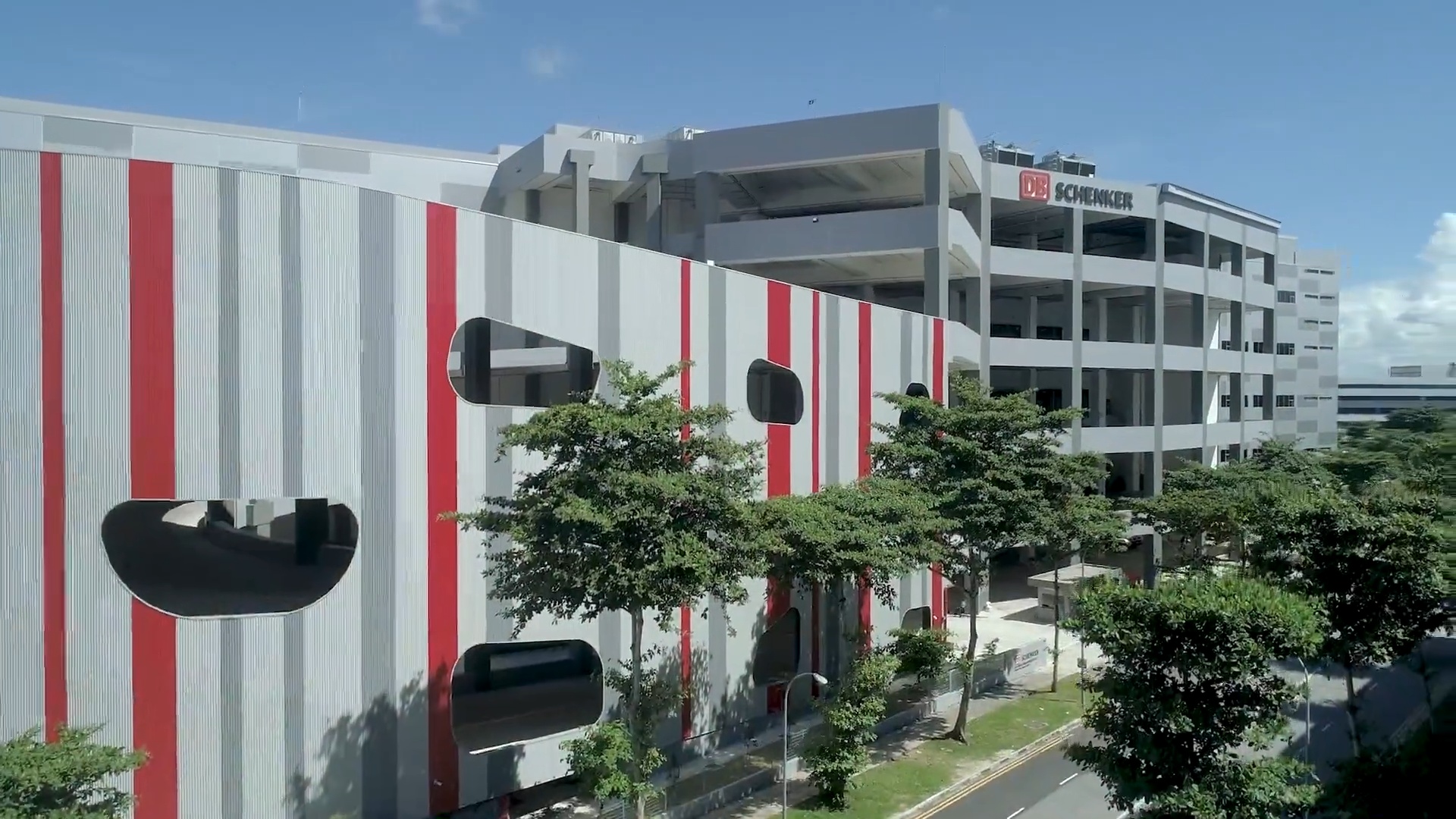
DB SchenkerGlobal Infrastructure Services Country HeadFeb 2020 – Jun 2022

Red Lion Warehouse: Cisco Meraki Transformation

Global logistics provider simplifies network management across 750+ warehouses

Cisco MerakiSD-WANIT/OT IntegrationWarehouse Automation

"With Cisco Meraki, everything is now centralized and can be configured and monitored from a single dashboard. The IT team can log in simply anytime, anywhere, on a computer or phone, via the Meraki app."

Lim Han YongGlobal Infrastructure Services Country Head, DB Schenker
750+Warehouses across 50 countries
1MTons of air freight / year
90%Singapore warehouses on Meraki
€101MRed Lion warehouse value

Challenge

  • DB Schenker is a global logistics and supply chain management provider with over 750 warehouses across 50 countries, transporting over 1 million tons of air freight annually.
  • The flagship Red Lion regional logistics hub in Singapore: a EUR 101M integrated facility combining contract logistics and office operations: needed a network that could keep pace with automated warehouse systems, AGVs, and Pick-to-Light technology.
  • Legacy Wi-Fi APs and switches operated in silos. Troubleshooting required logging into multiple separate systems. A single wireless controller problem could take down all APs, causing extended downtime.
  • The pandemic added urgency: real-time monitoring of safe distancing measures and staff density became critical.

Solution

  • Rolled out Cisco Meraki MR Wi-Fi access points, MS switches, and MX security appliances across 90% of DB Schenker's Singapore warehouses, including the Red Lion facility.
  • Centralized management via the Meraki dashboard: configuration, monitoring, and troubleshooting from a single pane of glass, accessible from any device via the Meraki app.
  • Each Meraki AP operates independently, so a single device failure no longer cascades into a site-wide outage.
  • Planned expansion: smart cameras and sensors for staff safety monitoring, truck verification, and warehouse security.

Results

  • 60% reduction in resources spent on troubleshooting: reallocated to improving operational efficiency and productivity.
  • Troubleshooting time reduced from hours to minutes.
  • 100% productivity increase at the Red Lion warehouse through IT/OT integration supporting AGVs, robotic systems, and automated workflows.
  • 40% lead time reduction in warehouse operations.
  • DB Schenker designated Meraki as its global partner for network infrastructure, with plans to implement across all warehouses in Asia Pacific and globally.
5Countries unified
SIPEF GroupGlobal IT Infrastructure LeadJul 2022 – Aug 2025

Program SEED: Global IT Consolidation

Unifying 5 countries under a single IT operating model

AzureSD-WANOffice 365Identity Management

"Program SEED was the foundation for everything else we built. Without a unified identity, email, and network, you can't even start talking about security, compliance, or AI."

Lim Han YongGlobal IT Infrastructure Lead, SIPEF Group
26IT team across 5 countries
23K+Employees supported
100K+Hectares covered (Indonesia)
1,500+Knowledge workers

Challenge

  • SIPEF Group operates across Singapore, Belgium, Indonesia, Papua New Guinea, and Ivory Coast: each with its own IT systems, email platforms, identity providers, and network infrastructure.
  • No single source of truth for user identity. No unified communication platform. Network management was fragmented across different vendors and local teams.
  • Supporting 23,000+ employees and 1,500+ knowledge workers with disparate systems meant high operational overhead and security blind spots.

Solution

  • OneMail: Consolidated all email and collaboration onto Microsoft Office 365, providing a unified communication platform across all 5 countries.
  • OneIdentity: Implemented Azure AD Connect with SSO, giving every employee a single identity for all applications: eliminating password fatigue and improving security posture.
  • OneNET: Deployed SD-WAN across all sites, replacing MPLS with software-defined networking for better performance, lower cost, and centralized management.
  • Azure Landing Zone: Designed and implemented a cloud foundation architecture following Microsoft CAF best practices.

Results

  • Unified IT operating model across 5 countries with centralized governance.
  • Single identity platform (Azure AD) for all 1,500+ knowledge workers with SSO.
  • SD-WAN reduced network costs while improving application performance.
  • Established the foundation for security compliance (NIST CSF) and AI innovation (6 MCP agents).
40%Manual task reduction
SIPEF GroupGlobal IT Infrastructure Lead2024 – 2025

6 Production MCP Agents: AI at Scale

From zero to six production AI agents in a global enterprise

MCPAI AgentsAutomationLangGraph

"We built 6 production MCP agents that talk to our infrastructure: Meraki, Palo Alto, Cambium, Zabbix, UpGuard, and Zoho. They don't just monitor; they diagnose, escalate, and sometimes fix things before anyone notices."

Lim Han YongGlobal IT Infrastructure Lead, SIPEF Group
6Production MCP agents
40%Manual tasks automated
60%Faster incident response
5Countries deployed

Challenge

  • Managing IT infrastructure across 5 countries with a lean team of 26 meant the team was constantly firefighting: responding to alerts, troubleshooting network issues, and handling repetitive operational tasks.
  • Incident response was reactive: alerts came in, a human triaged, diagnosed, and resolved. This took hours for issues that could be diagnosed in minutes.
  • The team needed to scale without growing headcount. Automation was the only path.

Solution

  • Built 6 production MCP (Model Context Protocol) agents, each specialized in a domain:
  • Meraki Agent: Queries network status, diagnoses connectivity issues, pushes config changes.
  • Palo Alto Agent: Monitors firewall rules, identifies policy violations, suggests remediation.
  • Cambium Agent: Manages wireless backhaul and last-mile connectivity for remote plantation sites.
  • Zabbix Agent: Analyzes monitoring data, correlates alerts, identifies root causes.
  • UpGuard Agent: Scans for vulnerabilities, tracks remediation progress, generates compliance reports.
  • Zoho Agent: Handles service desk tickets, automates common workflows, routes escalations.
  • Built on LangGraph with a shared orchestration layer for cross-agent workflows.

Results

  • 40% reduction in manual operational tasks: the team shifted from firefighting to strategic work.
  • 60% faster incident response through automated triage and diagnosis.
  • AI agents handle first-line response for 70% of common incidents without human intervention.
  • Platform is extensible: new agents can be added as new tools and systems come online.